



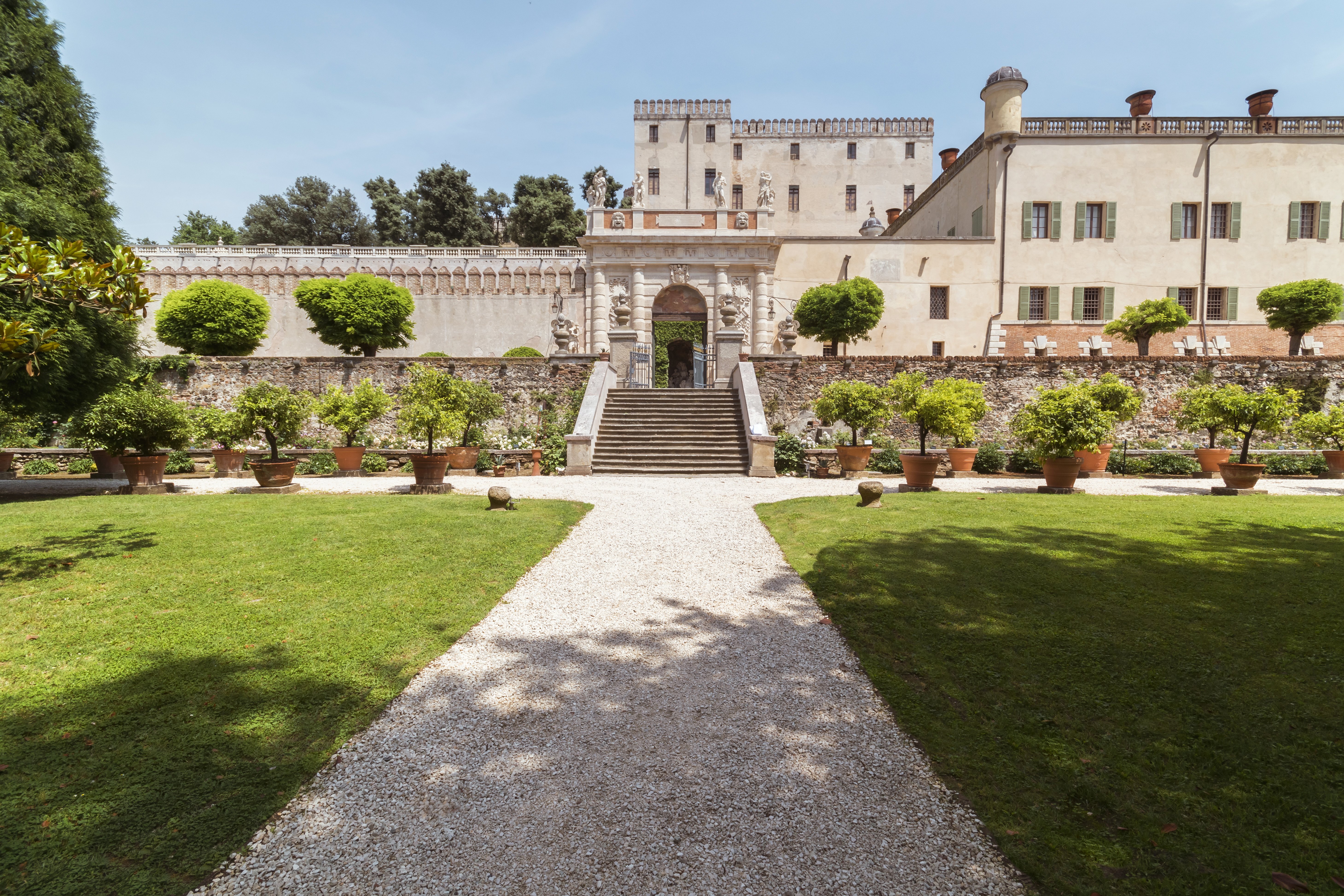
During a journey through northern Italy, I didn’t expect to stray from my planned route for such an unexpected discovery.
On the road to Padua, a small tourist leaflet caught my attention: it mentioned a mysterious place hidden in the Euganean Hills — the Castello del Catajo (Castle of Catajo).
Curious, I decided to take an unplanned detour of a few hours. What began as a quick stop along the way soon turned into a journey into a world of legends, monumental frescoes, and Renaissance stories.
Essential information for visiting the Castle of Catajo
Everything you need to plan your visit to Castello del Catajo
- Location: Battaglia Terme, Euganean Hills, near Abano Terme and Montegrotto, around 30 minutes from Padua and 1 hour from Venice.
- By car: Easy access via SS16 “Strada Battaglia”, about 1 km from the “Terme Euganee” exit (A13 motorway Padua–Bologna).
- By train: Battaglia Terme station (about 15 minutes on foot via “Passeggiata degli Obizzi”) or Terme Euganee station (about 5 minutes by taxi).
- By bike: Located on cycling route E2 of the Euganean Hills (63 km loop).
- Animals: Not allowed inside the castle. Allowed only in the park on a leash.
- Accessibility: Historic building with stairs. The piano nobile is not accessible to wheelchair users (no lift).
- Summer 2026 opening hours:
Tuesday, Wednesday, Friday: 15:00–19:00
Sunday: 10:30–19:00
Why Does an Italian Castle Sound Like Ancient China?
At first glance, one detail stands out: the name Catajo sounds strikingly similar to Cathay, the medieval European term for China.
It is, of course, just a coincidence — but one that was enough to spark curiosity and gradually blur the boundary between history and imagination.
Over the centuries, the castle became surrounded by stories: a supposed link with the distant East, a wealthy family of mercenaries, and an Italian estate that slowly turned into legend as much as historical fact.
Between history and imagination, one question naturally arises: what is the real story behind the Castle of Catajo?
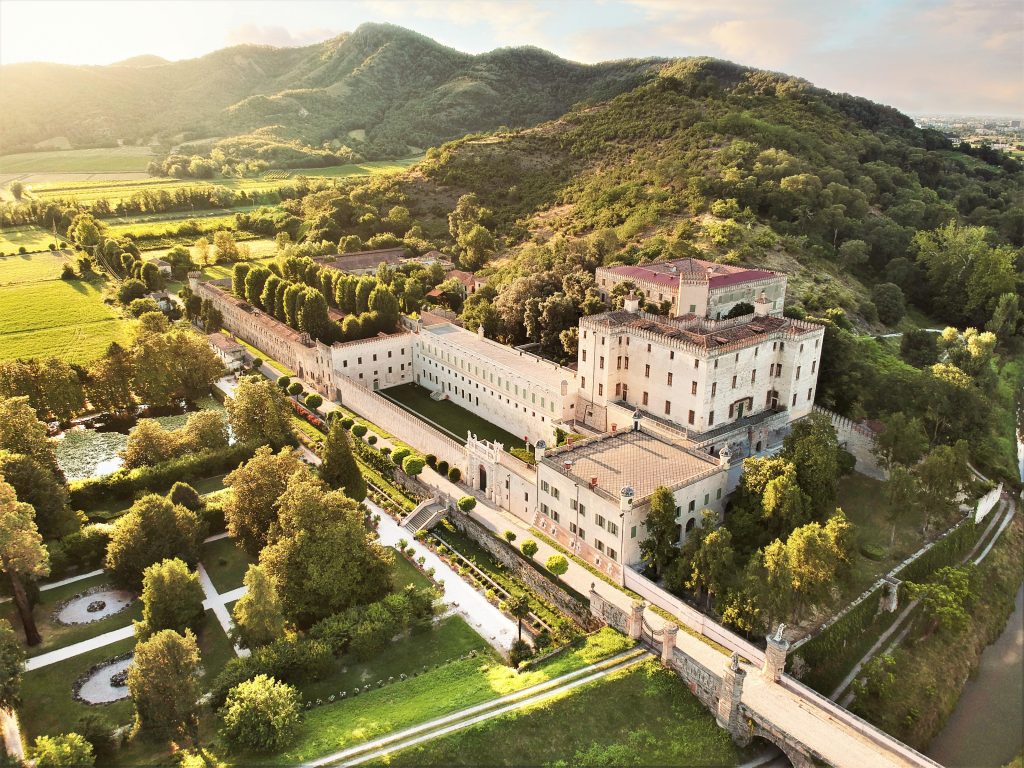
Photo: Castello del Catajo
When literature appears on the road
While my travel companion enjoyed a well-deserved nap, I let my thoughts drift through the rolling landscapes of Veneto.
That’s when verses from Ludovico Ariosto’s Orlando Furioso came back to me, especially those mentioning Angelica, the mysterious “Queen of Cathay” — a figure who drove knights to obsession.
Cathay, Catajo and the imagination of the world
Cathay was the medieval European name for China.
But what possible link could exist between the Far East, the Euganean Hills, and a 16th-century Italian castle?
None in historical terms.
Yet the simple phonetic resemblance between Catajo and Cathay was enough to fuel centuries of speculation.
A rumour even spread that the castle was connected to Marco Polo’s accounts of the East in The Book of Wonders.
The owners had no reason to correct it — why destroy a story that makes people dream?
Between myth and modern perspective
Seen through modern eyes, the Castle of Catajo bears about as much resemblance to China as New York does to Venice.
But in the 16th century, without travel blogs or fact-checking, stories travelled freely and imagination filled in the gaps.
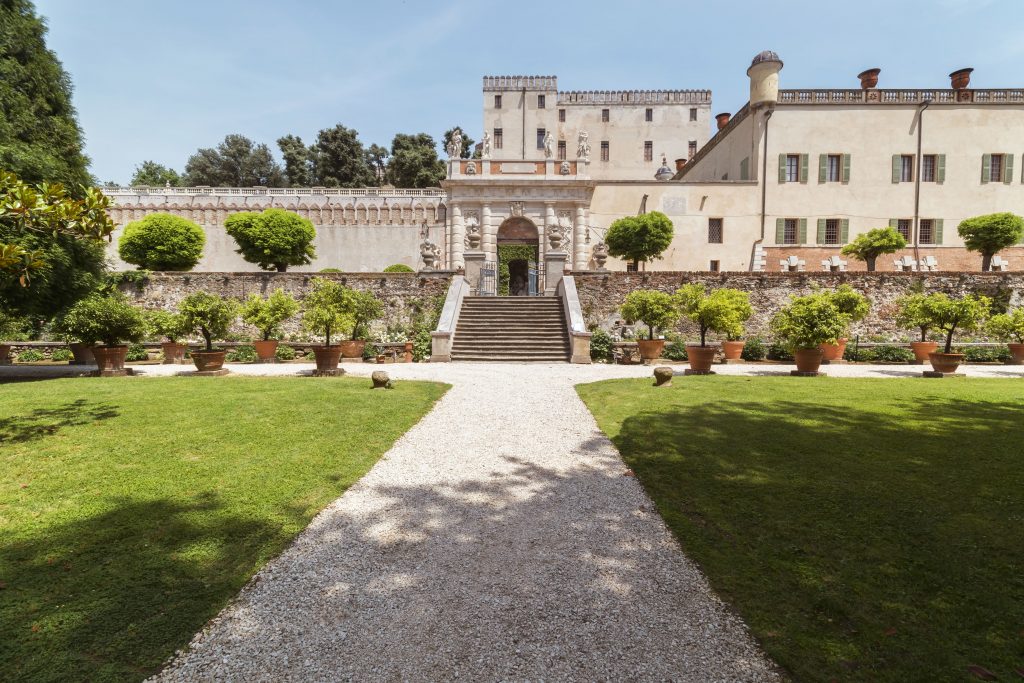
Photo: Castello del Catajo
The real origin of the name Catajo
Sorry to break the illusion, but the name Catajo has a much simpler origin than expected.
The Municipality of Battaglia Terme explains that the name Catajo most likely derives from the older expression “Ca’ Tajo”, meaning “house of the Tajo” and referring to the canal (“tajo”, meaning cut or passage) that runs through the area.
The “Tajo” probably referred to an ancient canal that cut through the land. A geographical origin rather than a mythical one.
The Obizzi: mercenaries turned legends
The Castle of Catajo was built in the early 16th century for the Obizzi family.
Originally of French origin and settled in Italy since the Middle Ages, they were not part of the traditional aristocracy. Their wealth came not from noble titles, but from warfare. They were professional soldiers and mercenaries.
While Venetian noble families were commissioning elegant villas, the Obizzi chose something far more imposing — a fortress-like residence, even in times of peace.
A castle designed to impress
Why build a fortified-looking castle in a peaceful region? The answer lies in spectacle as much as status.
One of the most remarkable features is a monumental ramp connecting the Courtyard of the Giants to the upper floors. It was designed so that riders could ascend on horseback directly into the upper halls.
An entrance designed for theatre rather than defence.
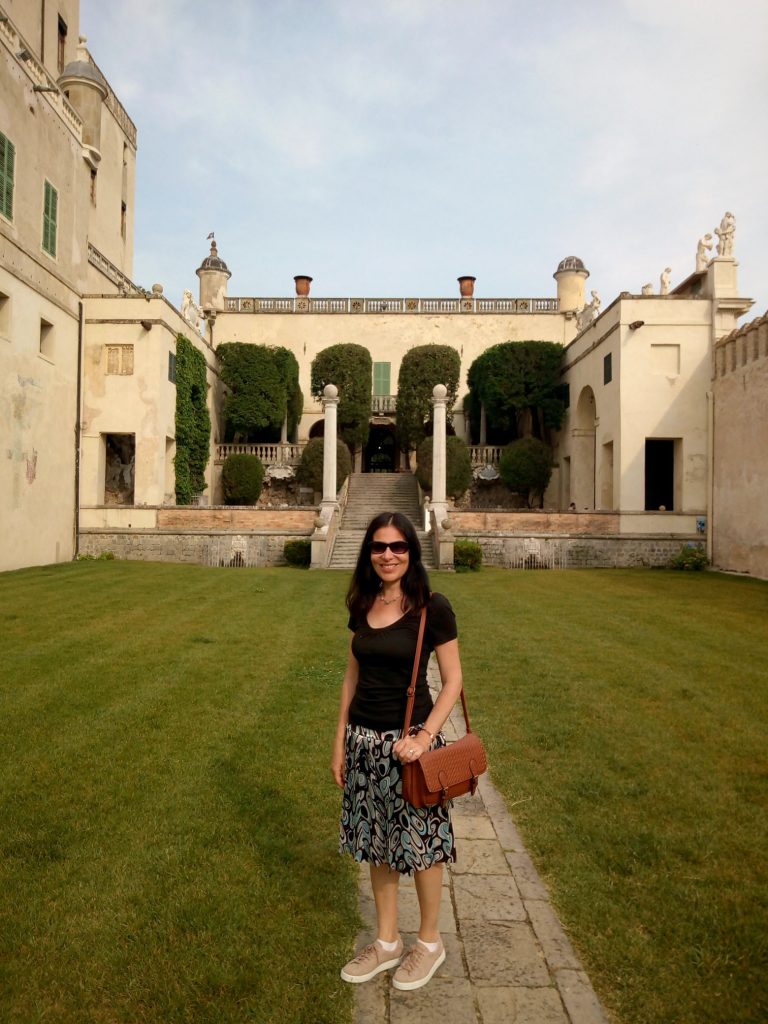
The Obizzi: wealthy warriors, not nobles
The Obizzi were not aristocrats. Their power and wealth came from military campaigns across Europe. Alongside warfare, they also relied on strategic marriages to strengthen their influence, including alliances with families close to the papacy.
The castle was therefore more than a residence — it was a statement of ambition, authority, and social ascent.
Spectacle and water battles in a castle courtyard
For the Obizzi, there was no clear line between war and entertainment. In the Courtyard of the Giants, they staged extraordinary performances, including simulated naval battles.
The courtyard could be flooded thanks to an ingenious hydraulic system. From the terrace above, guests would watch these theatrical spectacles unfold below.
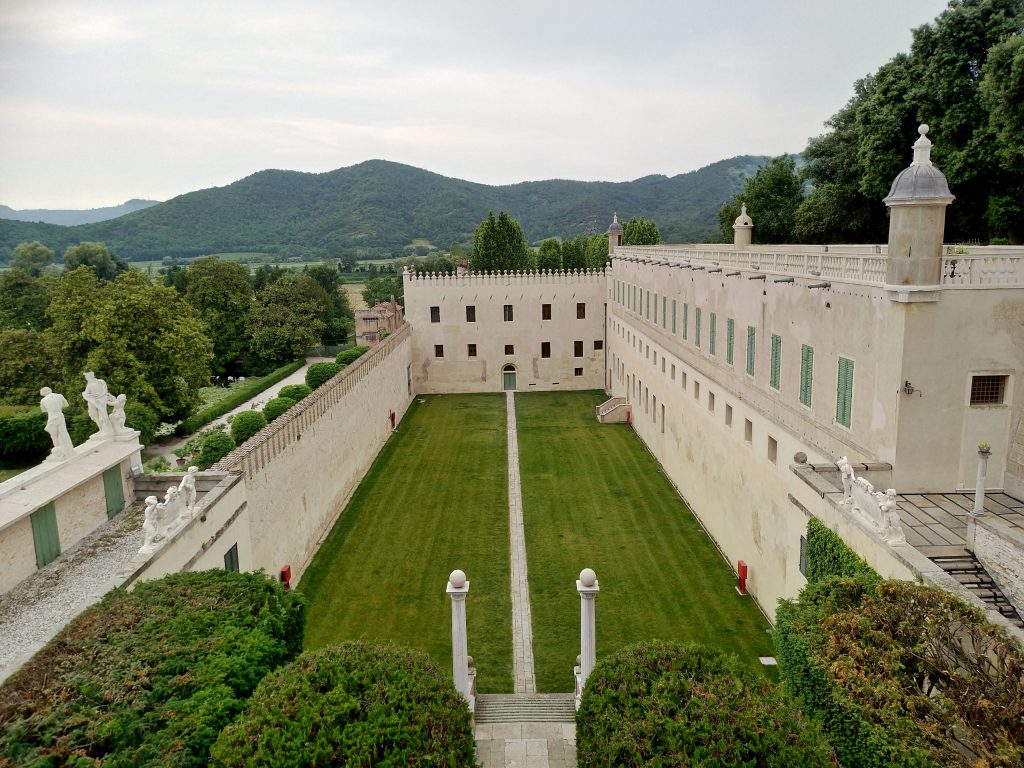
Art, theatre and secret gardens
Beyond warfare, the Obizzi also developed a strong appreciation for art and culture. In 1592, Pio Enea II Obizzi created a pleasure garden next to the palace, which can still be visited today.
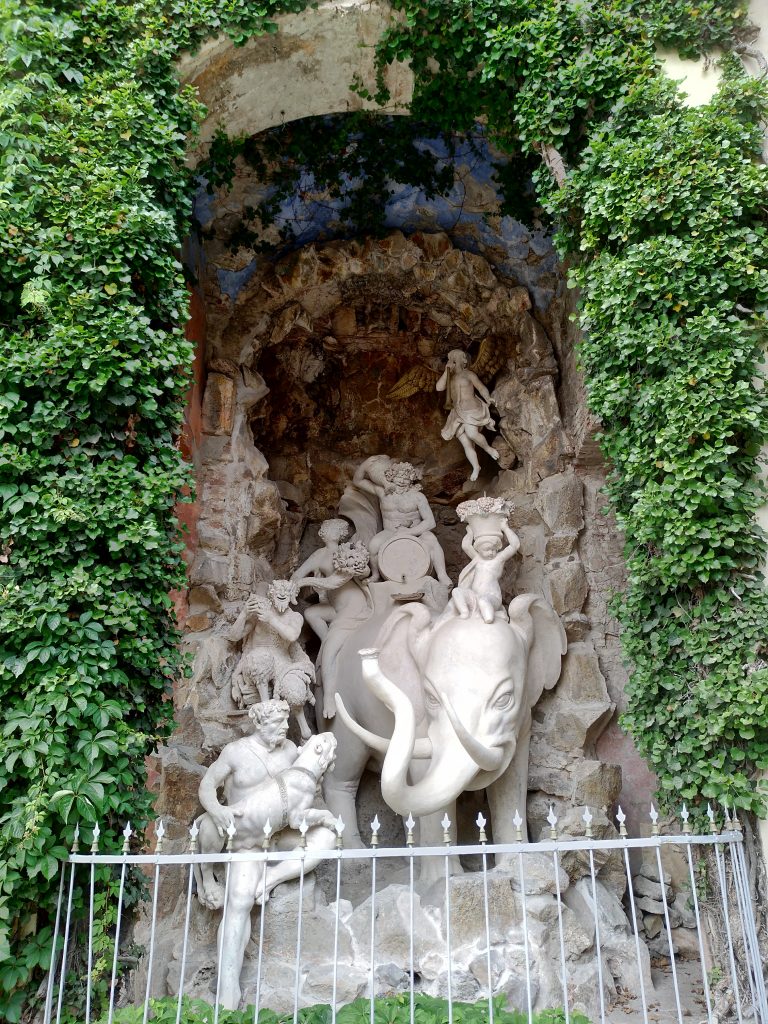
He also commissioned a private theatre within the complex, reflecting the family’s taste for performance and spectacle. At the entrance, the elephant fountain remains one of the castle’s most distinctive features.
Zelotti’s frescoes: a painted dynasty
To preserve their legacy, the Obizzi commissioned Gian Battista Zelotti, a pupil of Veronese, to decorate the piano nobile.
The frescoes transform the palace into a visual chronicle of the family’s history. Each room tells a different chapter — battles, alliances, and moments of power.
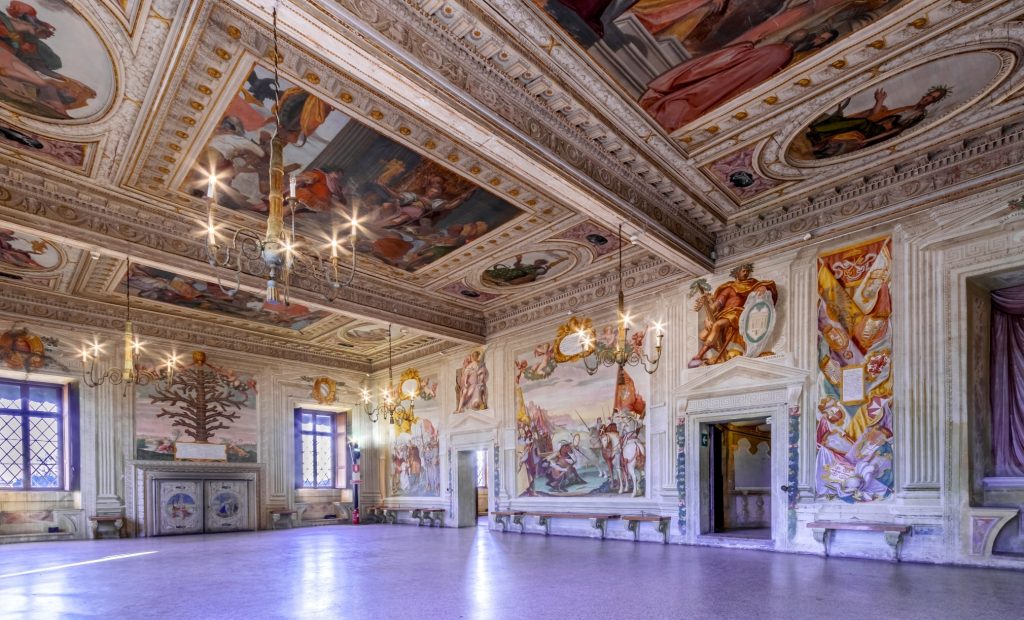
The decline and the Habsburg legacy
The Obizzi line came to an end in 1803. The castle then passed to the Habsburgs, who transferred many of its artworks and furnishings to Austria and to what is now the Czech Republic.
The elephant fountain remained in place, too fragile to be moved, and still stands guard at the entrance today.
The castle is now privately owned, but remains open to visitors.
Gabrina: a legend from Orlando Furioso
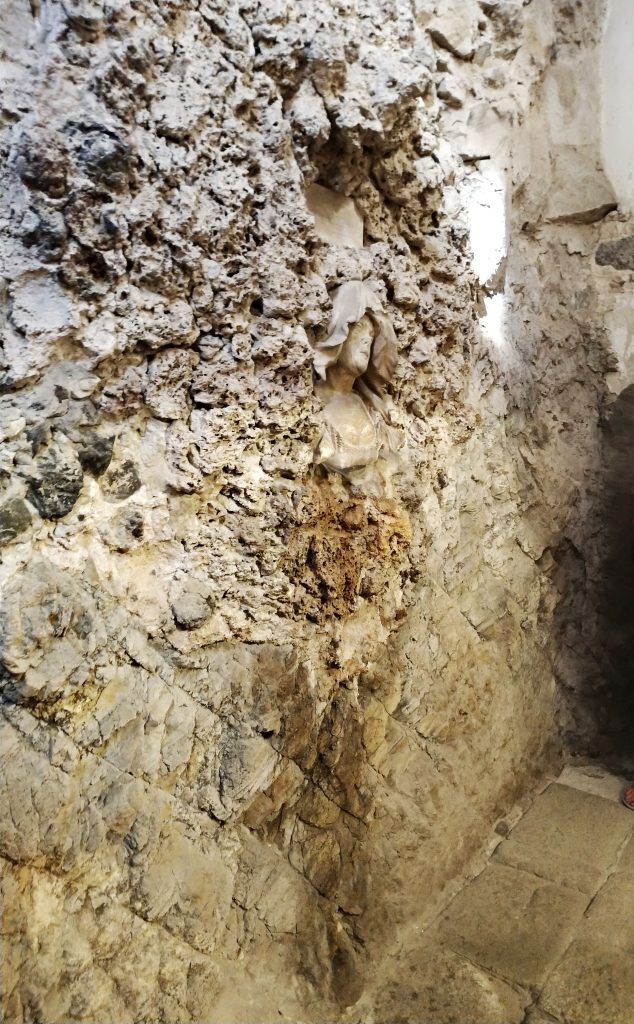
On the lower levels, a carved female figure appears in the rock: Gabrina.
She is a direct reference to Ludovico Ariosto’s Orlando Furioso. In the poem, she is an unusual character — elderly, unattractive and physically impaired, yet clever, witty and manipulative.
Inscription attributed to Gabrina:
“Here lies Gabrina, old and wanton,
brought here by her gallant Zerbin;
who, though deaf, lost and lame,
found her pleasures in love throughout her life.”
A final warning: legend says Gabrina may still play tricks on unsuspecting visitors.
An elephant with almond-shaped eyes: an imagined Orient
Before leaving, one last detail catches the eye: the elephant fountain.
Its almond-shaped eyes reflect Renaissance ideas about distant lands and symbolic ways of representing the world.
For Renaissance viewers, animals were often imagined as carrying traits associated with the regions they were believed to represent.
This detail offers a small but striking window into how the world was understood — and imagined — in the past.
A castle between myth and reality
The Castle of Catajo is a place where history and imagination constantly overlap.
Between mercenaries turned nobles, theatrical spectacles, and Oriental myths, the castle reveals as much about belief as it does about reality.
Practical information and visits
Official website: Castello del Catajo
Also discover in Italy
- The Leaning Tower of Pisa and tourist culture
- Sacra di San Michele: history and legend
- What to do and see in Turin
Updated July 2026

No responses yet