
'/%3E%3C/svg%3E)


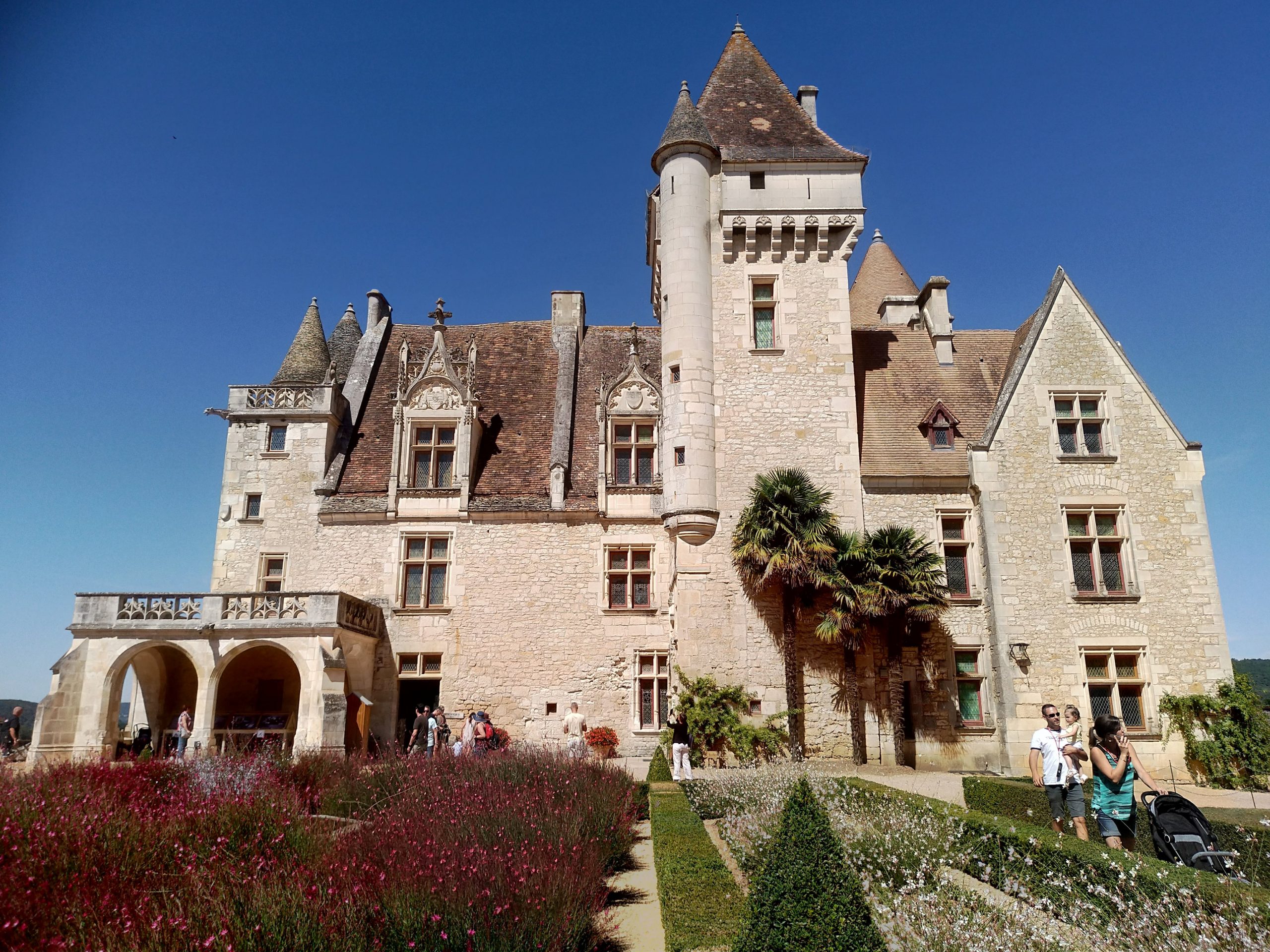
Château des Milandes is the kind of place that reveals its history slowly. Located in the Périgord Noir, near Sarlat-la-Canéda, this Renaissance château is known throughout France as the former home of Josephine Baker
Artist, Resistance agent, civil rights campaigner and French citizen by choice, Baker crossed boundaries that, for many others, would have remained impossible to overcome. At Château des Milandes, she found something that fame had never given her: a place she could call home. Here, far from the stages of Paris and the intensity of international tours, she attempted to build a different kind of future — one in which family, regardless of origin, could become a statement of human solidarity.
The story of Château des Milandes is therefore the story of an ambitious idea, of the woman who devoted herself to it, and of the delicate boundary between a dream imagined with extraordinary generosity and the reality required to sustain it.
Today, walking through the rooms of the château means moving through the different chapters of Josephine Baker’s life: the performer who captivated audiences, the woman who served France during the war, the activist who fought against racial injustice, and the mother who hoped to create her Rainbow Tribe.
Practical information for visiting Château des Milandes
- Where it is located: Château des Milandes is located in Castelnaud-la-Chapelle, in the Périgord Noir area of the Dordogne, approximately 16 km south of Sarlat-la-Canéda.
- How to get there: the most convenient way to reach the château is by car. A free car park is available for visitors, including spaces for buses and campervans during opening hours.
- Duration of the visit: allow at least 2 to 2.5 hours to fully enjoy the château, the French gardens, the chapel and the falconry display.
- Tickets 2026: adults €15, children aged 5 to 16 €9.50, students €12.50, visitors with reduced mobility €11.50. Free admission for children under 5 and wheelchair users.
- The ticket includes: access to the château, French gardens, chapel, projection room, falconry show and seasonal activities.
- Audio guide: a free audio guide is available.
- Accessibility: the site is accessible to visitors with disabilities, with reserved parking spaces available near the entrance.
- Photography: photography is not permitted inside the château. Outdoor photography and photos during the falconry display are allowed, provided that flash is not used.
- Picnic: picnic areas are available in the park.
- Animals: animals are not permitted inside the site.
- Official website: before travelling, it is recommended to check the official Château des Milandes website for opening times and seasonal updates.
Château des Milandes: Josephine Baker’s home in the heart of the Périgord Noir
There are places whose importance cannot be measured by architecture alone. Château des Milandes, set among the wooded valleys and limestone landscapes of the Périgord Noir, is one of them.
Located in Castelnaud-la-Chapelle, a few kilometres from Sarlat-la-Canéda and overlooking the Dordogne River, the château is known above all as the home of Josephine Baker: the legendary performer who became a French Resistance heroine, a campaigner for civil rights and one of the most remarkable figures of twentieth-century culture.
A journey to Château des Milandes is therefore a journey into more than the history of a Renaissance residence. It is an encounter with the life of a woman whose career moved from entertainment to political engagement and humanitarian action.
For Josephine Baker, Milandes became the first place where she could imagine a life that was not organised around theatres, hotels and railway timetables. Here, in a landscape of walnut groves, limestone cliffs and slow rivers, she spent some of the happiest years of her life and tried to turn one of her deepest convictions into daily life: that people from different backgrounds could live together as one family.
The result was the Rainbow Tribe: the twelve children she adopted from different countries and cultures, whom she hoped would demonstrate that diversity could become a source of unity rather than division.
Walking through the rooms of Château des Milandes means following the traces of a life that refused simple definitions: the life of an artist, a Resistance figure, an activist and a mother who attempted to transform her ideals into everyday reality.
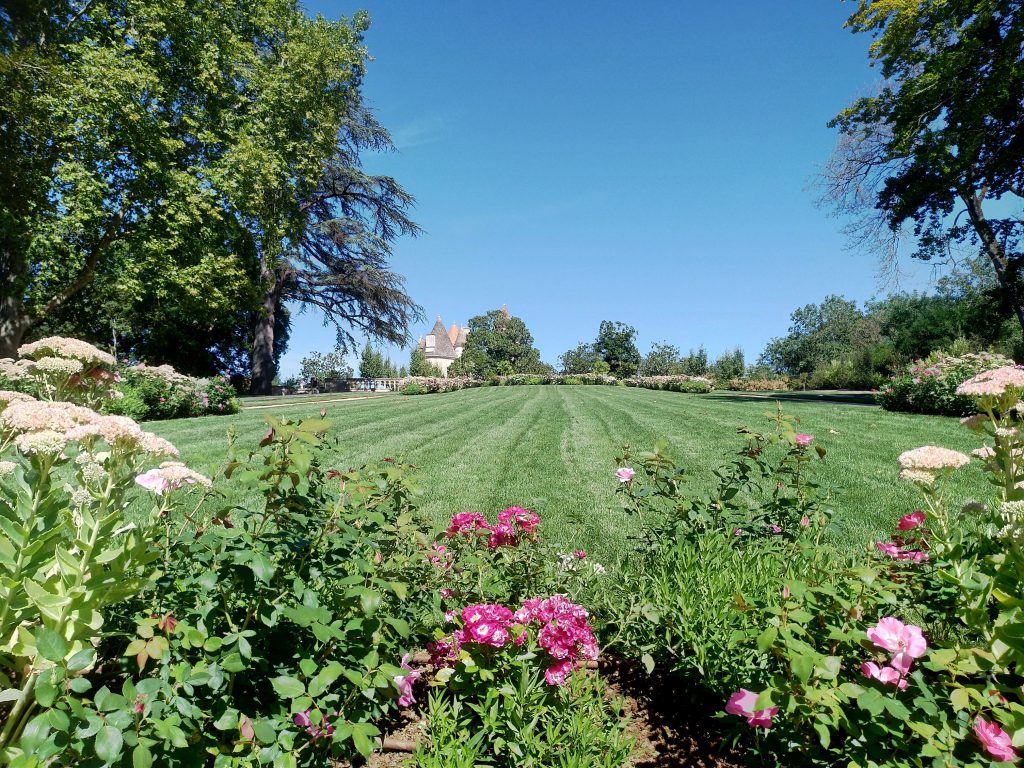
French-style garden
Château des Milandes: a Renaissance residence shaped by history
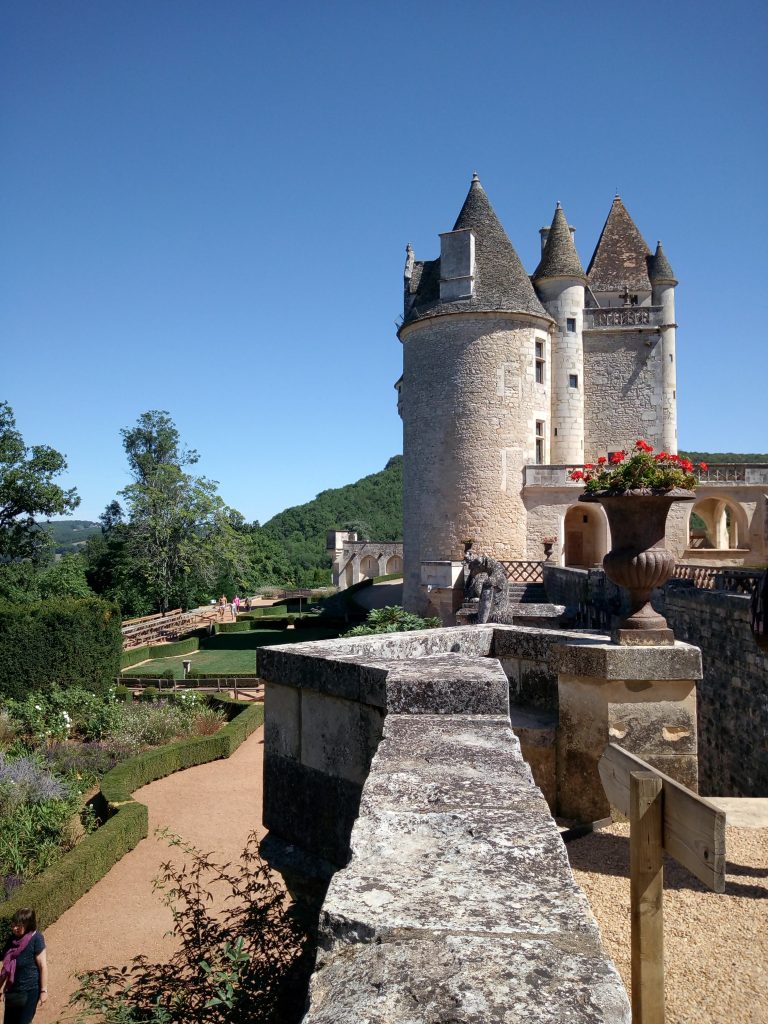
Approaching Château des Milandes, the first impression is one of harmony: the château rises above the Dordogne Valley, surrounded by carefully designed French gardens and the peaceful countryside of the Périgord Noir.
Yet the history of this residence is far from tranquil. Like many historic houses, Château des Milandes has known periods of splendour, abandonment and renewal.
From the Lords of Caumont to its twentieth-century restoration
The château was built in 1439 at the request of the Lords of Caumont, one of the most influential noble families of the region. Its architecture still reflects the period in which it was created, with elegant mullioned windows, spiral staircases and towers that recall both the refinement and the defensive character of medieval residences.
After the French Revolution, Château des Milandes was abandoned. By the nineteenth century, the château had fallen into neglect.
Its revival began at the start of the twentieth century, when the wealthy industrialist Charles-Auguste Delbret-Claverie undertook an extensive restoration project. The work lasted several years and transformed the château, adding romantic architectural elements such as decorative balconies and allegorical figures.
The restoration also brought the creation of the French gardens that now frame the residence, together with a small farm — additions that reflected the early twentieth-century fascination with the picturesque ideal of historic estates.
The château regained the elegance that had first made it remarkable, although its appeal was no longer only a question of architecture. Historic houses acquire their deepest meaning through the lives connected to them: the ambitions of those who built them, the choices of those who restored them, and the stories of those who later called them home.
None, however, would leave a deeper mark than Josephine Baker.
Josephine Baker first saw Château des Milandes in 1937, during a journey through the Périgord. The château stood above the Dordogne much as it does today, but Baker saw in it something beyond its Renaissance façades. She bought more than a house. She chose the place where she intended to build a different kind of life.
Josephine Baker at Château des Milandes
In 2021, President Emmanuel Macron announced that Josephine Baker would enter the Panthéon in Paris, the secular mausoleum reserved for the men and women whom France considers to have shaped the nation’s history.
Baker became the first Black woman to receive this honour, joining figures such as Marie Curie, Voltaire and Rousseau. Her admission recognised a life that had long exceeded the boundaries of entertainment, encompassing military service, political engagement and the struggle for civil rights.
But who was Josephine Baker beyond the performer who captivated Paris? And why did she choose to make her home at Château des Milandes?

Josephine Baker. – Baker Harcourt 1940. Public Domain
Josephine Baker: from Missouri to Paris
Josephine Baker was born in Saint Louis, Missouri, in 1906, into a modest family in a country where racial segregation shaped everyday life across much of the United States.
Her childhood was marked by poverty and hardship, but her talent as a performer emerged early. At fourteen, she began working as a dancer in theatres in Saint Louis and later in New York. Her talent brought her to the attention of Caroline Dudley, the wife of an American diplomat in Paris, who invited her to join La Revue Nègre.
It was Paris that made Josephine Baker famous.
Her appearance on stage — including the banana skirt that would become one of the defining images of her career — unsettled European audiences accustomed to a very different idea of entertainment and femininity. She combined humour, dance and a physical expressiveness that seemed unlike anything Parisian audiences had seen before.
Yet behind the spectacle was an artist who understood that performance could be more than entertainment. Josephine Baker was not simply a star of the Parisian stage. She understood fame as a form of freedom — a way of shaping her own identity in a world that repeatedly attempted to define her through race and stereotype.
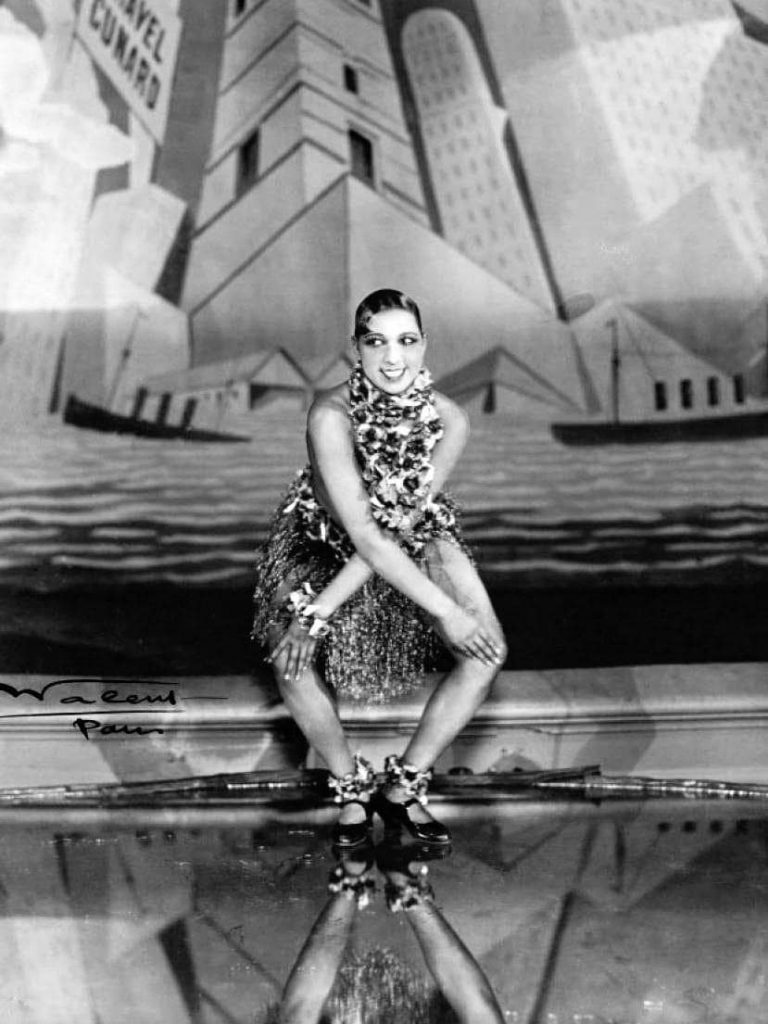
Josephine Baker- Folies Bergères, Paris 1926
When Josephine Baker discovered Château des Milandes
When Josephine Baker arrived at Château des Milandes in 1937, she was already an international celebrity.
During a visit to the Périgord, she found a château overlooking the Dordogne, surrounded by gardens and far removed from the world of theatres and international tours that had defined her career.
For someone whose life had been spent largely between theatres, hotels and railway stations, Milandes represented something rare: permanence.
After initially renting the château, Josephine Baker and her husband Jo Bouillon became its owners in 1947. They married in the château chapel, making Milandes part of their personal history as well as their public lives.
For Baker, Château des Milandes was never merely a residence. It was the place where she hoped to build a new kind of family and give concrete form to her ideals.
Château des Milandes during the Second World War
The life Baker imagined at Milandes was short-lived. In 1939, Europe entered the Second World War.
It was during this period, however, that she revealed another side of her character. Having become a French citizen in 1937, Baker chose to place her influence and resources at the service of the country she had made her own.
Josephine Baker in the service of France
During the war, Josephine Baker worked for French intelligence and participated in Resistance activities. Her fame gave her access that ordinary agents could never have possessed. She used that access to gather intelligence for the French Resistance.
She also used the stage itself as a tool of resistance, performing for Allied troops and raising funds for the cause.
Her contribution was officially recognised after the war. In 1961, she was awarded the Légion d’honneur for her services to France.
The story of Josephine Baker is therefore inseparable from the history of Château des Milandes. The château witnessed not only the private life of a celebrated artist, but also the choices of a woman who repeatedly refused to remain within the limits imposed upon her.
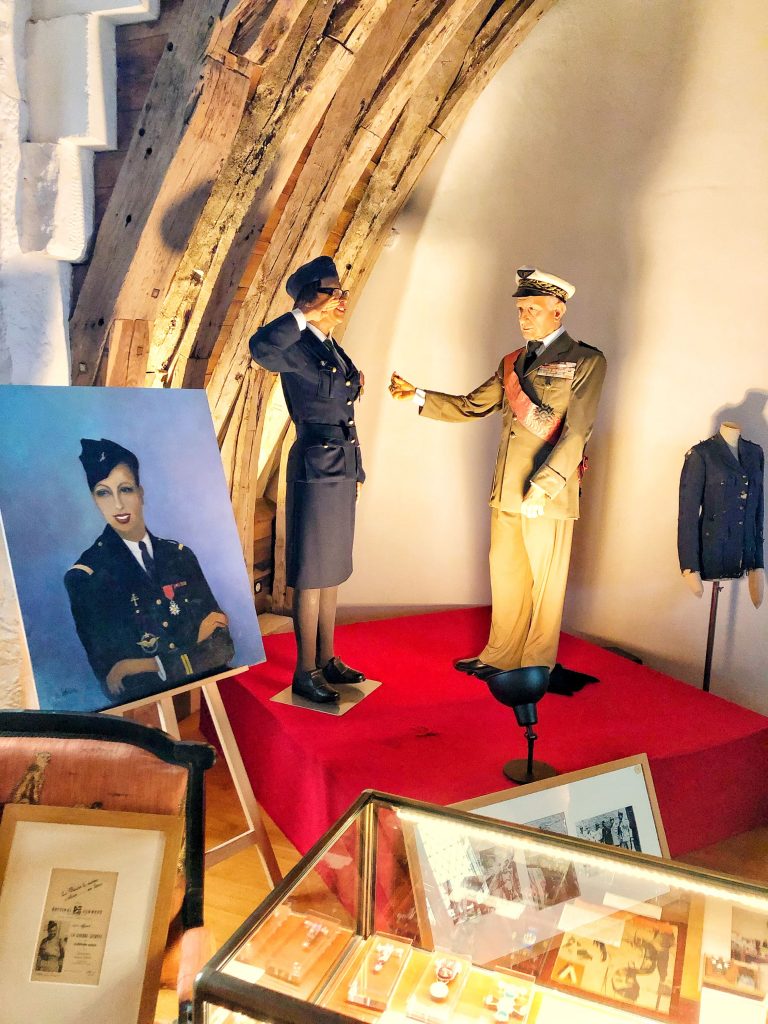
Josephine Baker receives the Legion of Honour medal. Photo credit: Château des Milandes.
The Rainbow Tribe: Josephine Baker’s most ambitious dream
After the war, Josephine Baker continued her commitment to civil rights. In the United States, she supported and helped finance the National Association for the Advancement of Colored People (NAACP), using her fame and resources to contribute to the fight against racial discrimination.
At Château des Milandes, however, she pursued a more personal vision: “le village du monde” — the “village of the world” — a place where different cultures and nationalities could coexist in harmony.
The centre of this project was her family: the Rainbow Tribe. During her travels around the world, Josephine Baker had adopted twelve children from different continents, hoping that their everyday life together would embody her belief that people of different origins could form one family.
The idea was radical for its time. At a moment when segregation and colonial attitudes remained deeply rooted in many societies, Baker imagined Milandes as a direct challenge to division— a home where diversity would not simply be accepted, but celebrated.
Inside the château, visitors can still see the rooms once occupied by the children — reminders of a project born from generosity, but shaped by enormous practical difficulties.
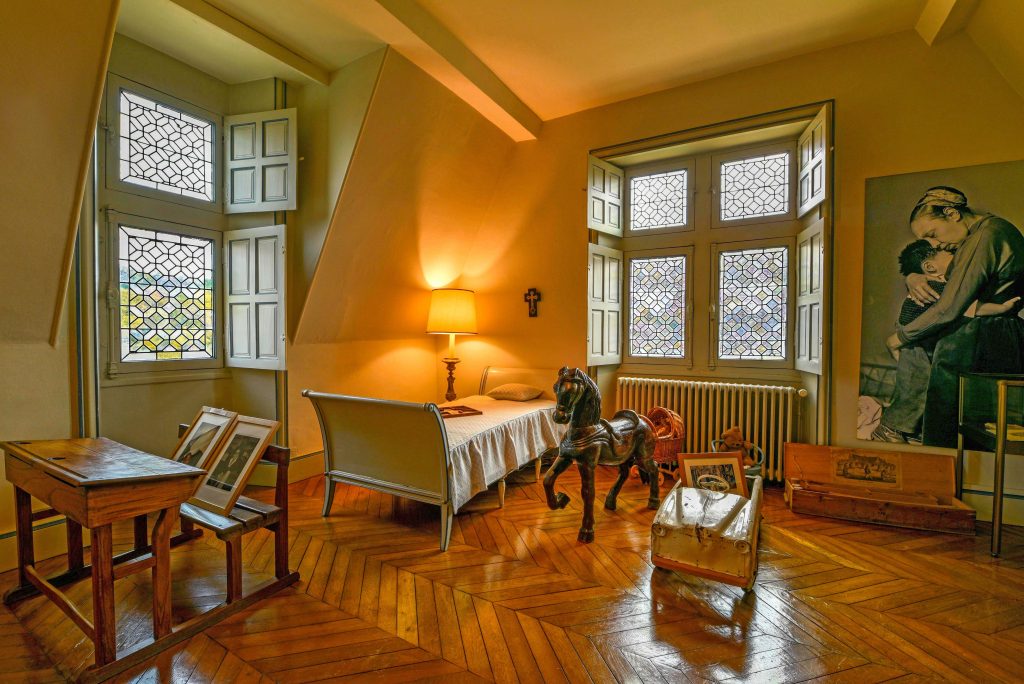
Bedroom of one of Josephine Baker’s children. Photo credit: Château des Milandes
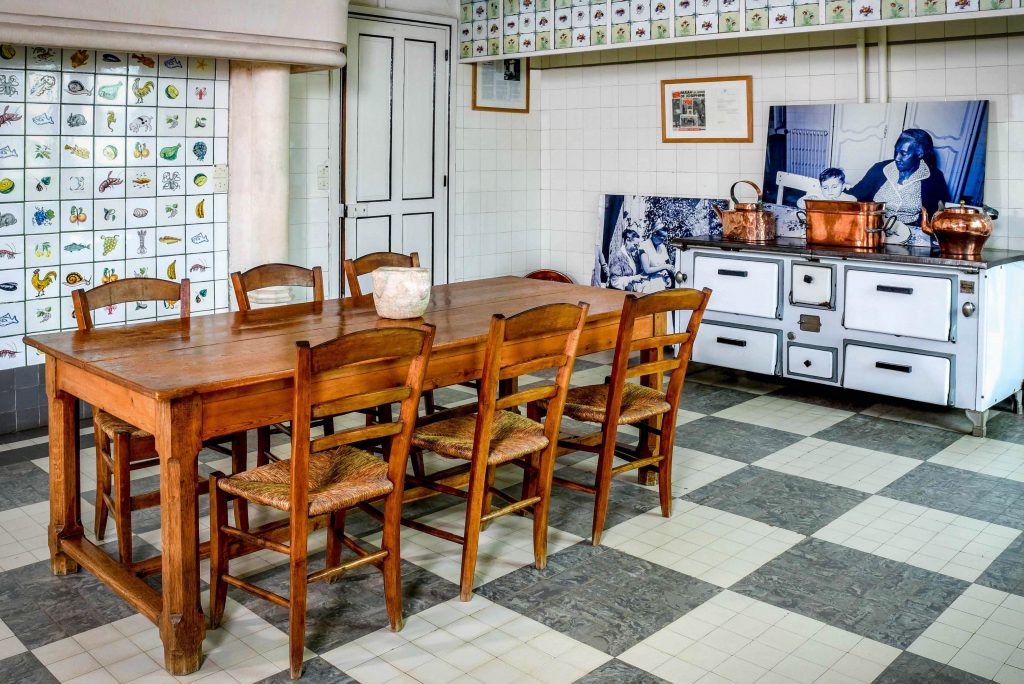
The kitchen of the castle. Photo credit: Château des Milandes
The Rise and Fall of Josephine Baker’s Dream
Generosity runs like a thread through Josephine Baker’s life. Yet generosity alone rarely explains a destiny. Alongside an extraordinary capacity for giving, Baker seems to have possessed a disarming trust in people and an enduring belief that goodwill could overcome practical realities. It was an admirable quality, though not always a fortunate one.
The same optimism that allowed her to imagine the Rainbow Tribe also made the management of Milandes increasingly difficult. The estate demanded resources, organisation and constant financial discipline—qualities that belonged less naturally to someone whose instinct was always to create rather than to calculate.
After separating from Jo Bouillon in 1960, Baker’s financial situation deteriorated steadily. The cost of maintaining the château and supporting the ambitious community she had created eventually became impossible to sustain. In 1968, Château des Milandes was sold at auction, and Josephine Baker was forced to leave the house where she had invested so much of her hope, energy and imagination.
For her, losing Milandes must have meant far more than losing a property. It was the collapse of a vision she had spent years trying to transform into everyday life.
From the loss of Milandes to Princess Grace’s support
Among the most moving moments of a visit to Château des Milandes are the photographs displayed towards the end of the exhibition. They show Josephine Baker in her sixties, exhausted yet resolute, sitting outside the entrance of the château after her eviction, wrapped in a blanket and refusing to leave.
The images are difficult to forget. They bring the visitor face to face with the distance between public legend and private experience. The woman who had once captivated Paris, entertained royalty and risked her life for France appears simply as someone unwilling to abandon the place where her greatest hopes had taken root.
Help eventually came from Princess Grace of Monaco, who offered Baker both friendship and practical support, enabling her to settle on the Côte d’Azur.
Josephine Baker returned to the stage one last time in Paris on 9 April 1975, in a performance celebrating fifty years of her career. Three days later, she died following a stroke.
Visiting Château des Milandes today
In 2001, Château des Milandes was acquired by Henri and Claude de Labarre. Since 2006, the château has belonged to their daughter, Angélique de Saint-Exupéry.
Today, visiting Château des Milandes means entering a place where the history of a building and the history of a woman have become impossible to separate.
Following Josephine Baker’s footsteps inside the château
Behind the elegant Renaissance façades lies a more intimate world: rooms filled with photographs, stage costumes and personal objects that tell the story of the many lives Josephine Baker inhabited — the celebrated performer of the Parisian stage, the woman involved in the Resistance and civil rights movements, and above all the mother who imagined these rooms as the heart of her Rainbow Tribe.
The visit leads through both formal reception rooms and private spaces, where traces of Baker’s personality remain visible. Some rooms evoke her musical career, with costumes and images recalling her years of international fame. Others tell the more personal story of her attempt to create, at Milandes, a home founded on acceptance and fraternity.
What makes Château des Milandes particularly moving is this meeting between two histories. The château built by the Caumont family coexists with the traces left by Josephine Baker, transforming the residence into a place where architecture, ambition and human vulnerability meet.
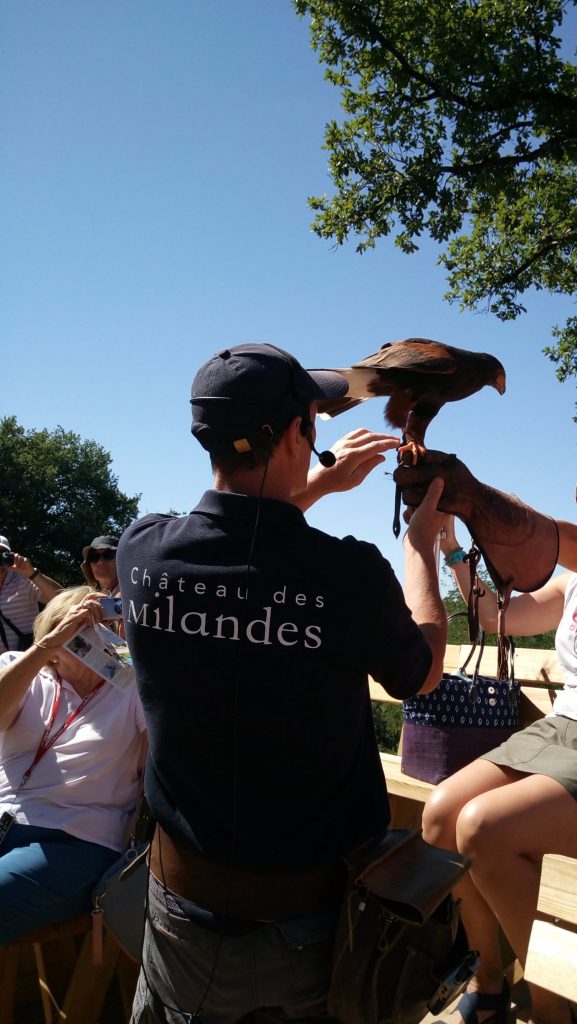
Demonstration of falconry
The falconry display at Château des Milandes
During the summer months, the gardens of Château des Milandes become the stage for a falconry display that brings another form of life to this historic estate. Falcons, owls and other birds of prey sweep above the audience with astonishing speed and precision, sometimes passing so close that their wings seem almost within reach.
There is something particularly fitting about watching these birds in a place like Milandes. After walking through rooms filled with photographs, costumes and memories of Josephine Baker, the visitor suddenly encounters movement, instinct and the untamed beauty of nature. The château, for a short while, is no longer only a place of remembrance; it becomes part of a living landscape.
At the end of the demonstration, when possible, visitors can approach the birds with the falconers, take photographs and learn more about the care and conservation of these species.
For me, this was one of the moments that completed the visit. Château des Milandes is a place marked by human dreams and ambitions, but it is also a place where the surrounding landscape still plays its own quiet role.
What remains after a visit to Château des Milandes
Among the many castles of the Dordogne, Château des Milandes is perhaps the one that leaves the strongest impression.
Not because it is the largest or the most imposing, but because every room carries the traces of an extraordinary human story: ambition, success, generosity, idealism and fragility.
Its fascination lies in these contradictions. The château preserves both the splendour of Josephine Baker’s achievements and the evidence of how difficult it can be to transform a dream into reality.
What to see near Château des Milandes: exploring Périgord
After visiting the château, it is worth lingering in the surrounding park and perhaps stopping at the brasserie to discover some of the flavours of the Dordogne.
The château also provides an ideal starting point for exploring the Périgord Noir, a region where medieval villages, fortified castles and landscapes shaped by centuries of history unfold along the Dordogne.
Those who continue towards the Périgord and Quercy will encounter a landscape of stone villages, winding rivers and forests, where history remains part of everyday life.
Last updated: July 2026
Facebook: Meraviglieuropa
Instagram: Veronica.Meraviglieuropa
Pinterest: Meraviglieuropa

No responses yet